Contents
Spatial-UMI-Dream:Scaling World Action Models with Metric Geometry
for UMI Manipulation
1 USC Physical Superintelligence Lab2 CMU3 Texas A&M University
* Equal contribution
Overview
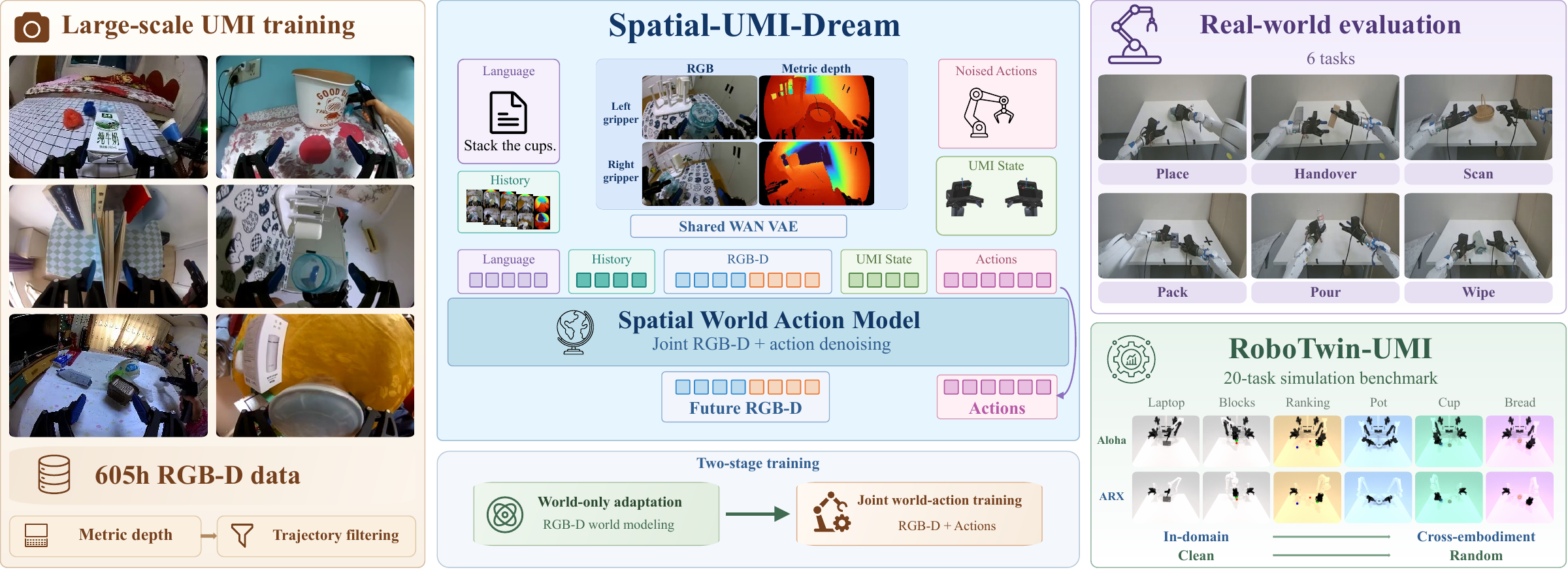
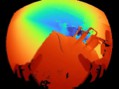
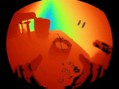
UMI collects demonstrations without tying them to a specific robot. But its moving, close-range gripper cameras entangle camera and object motion with no stable external view, leaving the metric geometry needed for precise manipulation implicit in RGB.
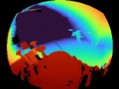
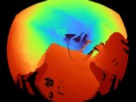
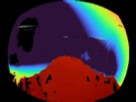
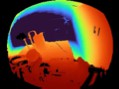
Spatial-UMI-Dream is a 5B spatial World Action Model pretrained on 605 hours of RGB-D UMI data to jointly predict future RGB, metric depth, and actions. RoboTwin-UMI is a twenty-task simulation benchmark for evaluating UMI policies under embodiment and environment shifts.
Contributions
- Spatial world-action modeling at scale. Two-stage training on RGB-D UMI data incorporates metric geometry into joint observation and action prediction.
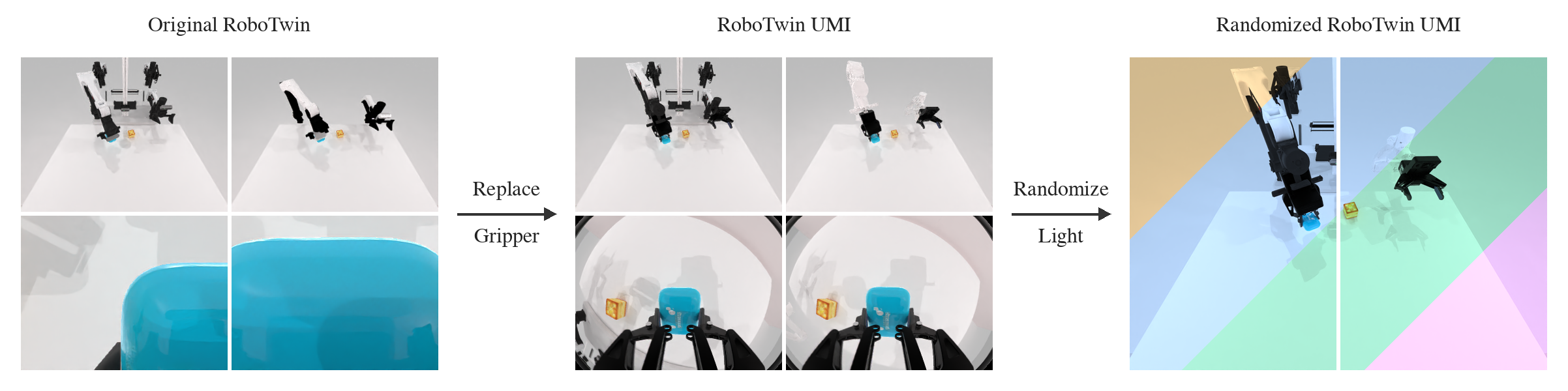
- A benchmark for UMI policy generalization. RoboTwin-UMI reproduces wrist-mounted fisheye views and tests generalization across embodiments and environments.
Spatial-UMI-Dream
- RGB token
- Spatial token
- Text token
- History token
- State token
- Action token
Left
gripper
 Right
gripper
 RGBSpatial
gripper
Rightgripper
RGBSpatialFuture RGB-DWan VAE
ℒworldCross-attentionText encoderLanguage
Wan VAE History
Wan VAE
Left
gripper
 Right
gripper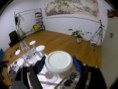
 RGBSpatial
Current RGB-Dgripper
Rightgripper
RGBSpatialStage 1 | World-only adaptation
Initialize
Left
gripper
 Right
gripper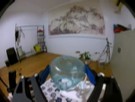
 RGBSpatial
gripper
Rightgripper
RGBSpatialFuture RGB-DWan VAE
Future actions Action decoder
ℒworld + λaℒactionAction decoderCross-attentionText encoderLanguage
Wan VAE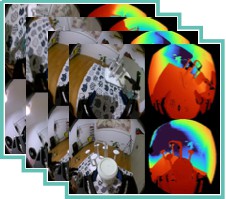 History
Wan VAE
Left
gripper
 Right
gripper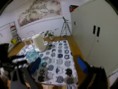
 RGBSpatial
Current RGB-Dgripper
Rightgripper
RGBSpatialState encoder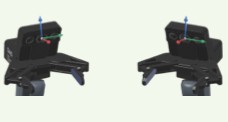 UMI state
Action encoder Noisy actions
Stage 2 | Joint world-action training
1
World-only adaptation
Learn the geometry of the world before touching it.
TextHistoryRGB-D→Future RGB-D
2
Joint world-action training
Dream the future in 3D, and act on it.
TextHistoryRGB-DStateNoisy actions→Future RGB-DActions
RoboTwin-UMI benchmark
Two robot embodiments share the same UMI gripper and fisheye cameras to test cross-embodiment transfer; randomized lighting on the same tasks tests environmental robustness.
Benchmark
Generalization evaluation protocol
All models train on the twenty tasks with 50 clean Aloha-AgileX demonstrations each, then are evaluated on two embodiments and two lighting conditions without further fine-tuning.
| Setting | Robot | Lighting | Evaluates |
|---|---|---|---|
| In-domain | Aloha-AgileX | Clean | Training conditions |
| Cross-embodiment | ARX-X5 | Clean | Embodiment transfer |
| Environment shift | Aloha-AgileX | Randomized | Environmental robustness |
| Joint shifts | ARX-X5 | Randomized | Both changes together |
Experiments
Simulation results
Stack Blocks TwoAloha · clean lighting · 1×
Mean success / 20 tasks79.10%
Strong in-domain performance.
Real-world results
Dexmate Vega1 · 1×
Success rate / 20 episodes
Where the gains come from
Ablation studies
The role of UMI pretraining and metric depth
Four variants share identical downstream demonstrations. The RGB-only variant duplicates its RGB views in place of depth panels, so visual token count and training budget stay matched.
| Variant | UMI world adaptation | Joint world-action | Metric depth | In-domain SR |
|---|---|---|---|---|
| Wan2.2 (no UMI pretraining) | ✗ | ✗ | ✓ | 39.50 |
| Spatial-UMI-Dream-Video-only | ✓ | ✗ | ✓ | 61.25 |
| UMI-Dream (RGB-only) | ✓ | ✓ | ✗ | 73.35 |
| Spatial-UMI-Dream | ✓ | ✓ | ✓ | 79.10 |
Both stages contribute.
UMI world adaptation builds a spatial foundation. Joint world-action pretraining then connects that representation to manipulation.
Metric depth matters.
In-domain success improves over matched RGB-only pretraining, with demonstrations, training budget, and visual token count held fixed.
BibTeX
@misc{yuan2026spatialumidreamscalingworldaction,
  title         = {Spatial-UMI-Dream: Scaling World Action Models with Metric Geometry for UMI Manipulation},
  author        = {Weiduo Yuan and Ze Yuan and Sihan Liu and Jionghao Wang and Liang Heng and Zhenyu Zhao and Yue Wang},
  year          = {2026},
  eprint        = {2611.07229},
  archivePrefix = {arXiv},
  primaryClass  = {cs.RO},
  url           = {https://arxiv.org/abs/2611.07229}
}